


Daily Bible Study: Audio, Plan
4.654.70K Reviews
App Specs
- Version
- 7.42.1
- Updated On
- License
- Free
- Downloads
- 10,000,000+
- Developer
- Salem Media Group
- Categories
- Books & Reference
- Platform
- Android, iOS
Screenshots
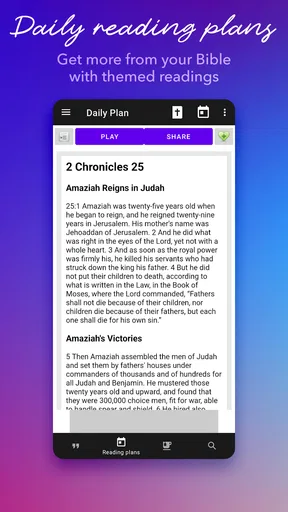
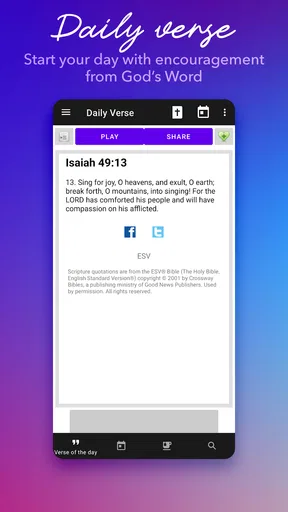
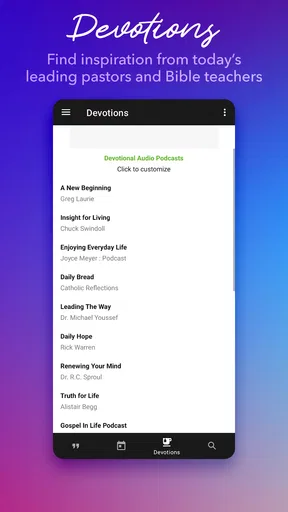
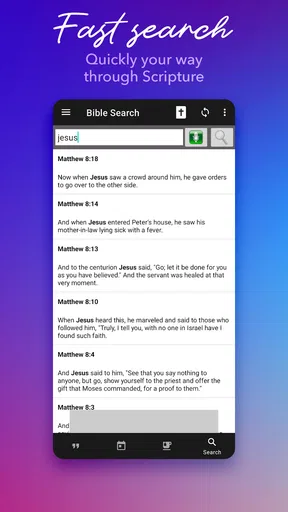
 Analysis by AppCompare
I approached Daily Bible Study: Audio, Plan as a practical reading companion rather than something to open once and forget. It is a free Books & Reference app from Salem Media Group, built around regular Bible reading, devotional material, verse-focused reflection, audio content, and guided plans. That combination makes it more useful for people who want a repeatable routine than for someone who only needs a Bible text lookup tool.
My main question was simple: does it make daily study easier, or does it merely place familiar material inside another app? After using it as a morning reading tool, an audio companion, and a way to keep a study habit moving, I found that its strongest quality is structure. It gives a user several ways to approach the same general goal, while still keeping the experience approachable enough for a short session.
What to consider before choosing a Bible study app
The right choice depends less on how many features appear on the first screen and more on how you actually study. If you already know which passage you want, a straightforward Bible reader may be faster. If you want historical notes, multiple translations, original-language tools, or a deep research library, a specialist study platform may be a better fit. Daily Bible Study sits in a different space: it is aimed at helping people return consistently.
I would judge it using four practical questions. Can I begin a session without planning it in advance? Can I keep reading when my eyes are busy or I am away from my desk? Does the app give me enough direction when I do not know what to read? And does it remain comfortable for a quick visit rather than demanding a long study block?
Those questions matter because a daily habit often fails through friction. A complicated library can be excellent for research but discouraging at seven in the morning. A bare text reader can be fast but leave the user wondering what to read next. This app’s mix of plans, verse material, devotionals, and audio is designed to reduce that decision fatigue.
The app is also easy to approach from a device-compatibility perspective. It supports Android devices running version 7.0 or later, and its content rating is Everyone. That makes it suitable for a broad household audience, although parents should still decide how they want younger readers to use any religious reading application and its connected material.
How I would use it in an ordinary day
My most useful routine was to treat the app as a set of entry points rather than a single course. On a busy morning, I would start with a short reading or verse instead of promising myself a long session. When I had more time, I could follow a plan and let the sequence remove the burden of choosing a passage. Later, audio made it possible to continue engaging with the material while doing a simple task.
Worth Reading Before You Choose

Flipboard Shows What News Apps Must Do Beyond the Feed

Switching to Android Auto Means Rethinking Your Driving Routine

Google Calendar Makes a Crowded Week Easier to Manage

Ludo King Makes the Most of the Minutes Between Plans

Baby Panda World Brings Quick Play to Modern Phones, but Its Game Library Feels Busy

ESPN’s Live Game View Makes Following Close Games Easier
This is a realistic distinction from ordinary browsing. Opening a Bible app with no plan can lead to searching for a familiar verse, reading a few lines, and leaving. A guided plan creates a next step. The trade-off is that a plan may not match the question on your mind that day. I found the best approach was to keep the plan as the backbone and use the verse, devotional, or audio areas when I needed a shorter or more flexible session.
A useful habit is to decide the session length before opening the app. For example, I might give myself ten minutes before work, then return to audio during a walk. This prevents the app from feeling like another obligation. It also helps reveal whether you genuinely prefer guided reading or whether you only want occasional reference access.
Where the app feels stronger than a basic reader
The clearest advantage is the combination of formats. A normal Bible reader is usually strongest when you already have a passage in mind. Daily Bible Study is more helpful when you want a prompt, a devotional angle, or an audio option to get started. I especially liked that the experience can move between quiet reading and listening without changing the overall purpose of the session.
The guided-plan approach is valuable for people who repeatedly say they want to read every day but struggle to maintain momentum. A plan gives the habit a shape. It can also be useful for a small group or family routine, where having a shared direction is easier than asking everyone to choose independently.
Another strength is its suitability for fragmented time. Many reading apps assume that the user is sitting still with a screen. Here, audio content gives the app a role during commuting, walking, household chores, or a lunch break. I would not treat listening as a complete replacement for careful reading, but it is a practical way to keep contact with the material when visual attention is unavailable.
The devotional and verse-oriented material also makes the app less intimidating for a newcomer. Someone who has not developed a reading method may find a full Bible overwhelming. A focused reflection can provide a manageable starting point, while the broader reading plan remains available when confidence grows.
Its popularity supports the idea that this format works for many users: the app has an average rating of 4.6 from around 210 thousand ratings, with more than 10 million installs. I do not treat those figures as proof that it will suit everyone, but they do suggest that the basic combination of daily prompts, plans, and audio has broad appeal.
Small workflow improvements that make a difference
One of the less obvious ways to get more from the app is to separate discovery from study. I would not spend the beginning of every session browsing every available area. Instead, I would choose one plan as the main route, then use the verse or devotional sections only when I have a specific reason. This keeps the app from turning a reading habit into endless content selection.
A second useful tactic is to pair formats deliberately. Read the passage when you can give it attention, then use audio later as reinforcement. Listening first may be helpful when you are unfamiliar with the material, while reading afterward can make details easier to notice. The important point is not to treat audio as background noise every time; occasionally giving it full attention makes the experience more meaningful.
For people who lose routines easily, a simple reset rule helps. If you miss a day, do not try to compensate by forcing a long session. Return to the next manageable reading and continue. The app is most effective when plans support consistency rather than create guilt. That is a user habit, not a special feature, but the app’s structure makes it easier to follow.
I would also use the app differently depending on whether I am reading for reflection or research. For reflection, I would stay within a plan and devotional flow. For research, I would switch to a dedicated reference tool or a printed study Bible if I needed extensive notes, cross-references, or a detailed comparison of translations. Recognizing that difference prevents disappointment.
Where another type of app may fit better
Daily Bible Study is not automatically the best option for every kind of reader. If your priority is rapid searching, a minimal Bible reader may feel cleaner. If you regularly compare wording across translations, investigate context, or build detailed notes, a more scholarly study platform will probably offer a better workflow. I would not choose this app expecting it to replace every other Bible resource.
It may also be a weaker match for someone who dislikes guided content. Plans are useful when you want direction, but they can feel restrictive if you prefer to jump between books and passages according to a personal study agenda. In that case, a library-first app or a physical Bible with your own reading schedule may be more satisfying.
Audio is helpful, but it also changes the kind of attention involved. If you need to examine a sentence closely, pause frequently, or annotate as you go, reading on screen or from print remains better. I see audio as an accessibility and convenience layer, not as a universal substitute for visual study.
There is also a difference between a devotional experience and a neutral reference experience. Some readers want a daily reflection to shape the session; others want only the text and the freedom to interpret it independently. Before committing to this app, I would decide which of those expectations is closer to my own. The app’s appeal comes from its guided, habit-oriented character, so users seeking a completely bare reading environment may prefer something else.
What the free model means in practice
The app is free to download and use, which makes it easy to test without paying at the starting point. It also includes in-app purchases ranging from $0.99 to $100.00 per item. That means I would pay attention to any optional purchase screen and decide whether the free experience already covers my routine before spending money.
For me, the sensible approach is to begin with one reading plan and the formats I expect to use most. If the app becomes part of my daily schedule, I can then decide whether an optional purchase adds enough value. I would not buy simply because a prompt appears during setup, especially when my goal is basic reading and listening.
This model is neither automatically a problem nor something to ignore. Free access lowers the barrier for new readers, while optional purchases may suit people who want more from the experience. The important trade-off is attention: if commercial prompts interrupt the calm rhythm you want from devotional reading, a paid or simpler alternative may feel better even if it offers fewer guided materials.
Version, access, and everyday practicality
The current version is 7.42.1, and the Android requirement of 7.0 or later means the app remains accessible on many older devices. That matters if you keep a spare phone for reading or want a family member with an older handset to participate. I would still keep the app updated when possible, since current software generally provides the smoothest experience.
Because the app combines reading and audio, I would think about when and where I plan to use it. At home, a quiet reading session is straightforward. Outside, audio is more convenient, but I would avoid starting a listening session in situations where it could distract me. The most reliable routine is one that matches the device and environment rather than forcing every feature into every moment.
The Everyone rating makes the app broadly approachable, but suitability is still personal. A child may need guidance about which material to explore, while an adult newcomer may benefit from starting with a short devotional rather than a demanding plan. The rating describes general audience access; it does not replace choosing content thoughtfully.
Who should download it, and who should skip it
I would recommend it to someone who wants a gentle push toward regular Bible reading, appreciates having a plan, and likes the option to listen instead of always reading. It is particularly well suited to busy users who need short sessions, beginners who do not know where to start, and readers who want devotional context alongside the text.
I would also consider it for someone trying to rebuild a lapsed habit. The app gives several ways back in: a verse for a very short visit, a devotional for guided reflection, a plan for continuity, and audio for times when reading is inconvenient. That flexibility is more useful than simply adding a large number of tools to one screen.
I would skip it if my main goal were advanced textual research, extensive personal annotation, or a completely distraction-free reading environment. I would also look elsewhere if I strongly preferred print or if guided devotional material did not match the way I think about Scripture. In those cases, a physical study Bible, a minimal reader, or a research-focused application may be the better investment of time.
My recommendation after weighing the trade-offs
After using it as a daily companion, I see Daily Bible Study as a habit-building app first and a reference library second. Its value comes from helping me begin, continue, and adapt a session. The plan gives direction, the devotional material gives a reflective entry point, and audio makes the routine less dependent on sitting in front of a screen.
Its limitations are closely connected to those strengths. A guided experience is not the same as an exhaustive study environment, and a flexible collection of formats can feel less focused than a simple reader. Optional in-app purchases also mean I would explore the free experience carefully before deciding whether anything extra is worthwhile.
For a reader who wants an approachable daily rhythm, I think it is worth trying. I would start with a short session, choose one plan rather than browsing endlessly, and test audio in a separate part of the day. If that routine feels natural after several sessions, the app is doing exactly what it should. If I find myself searching more than reading, needing deeper research tools, or avoiding guided material, I would switch to a more specialized alternative instead.
Overall, Salem Media Group has made a useful choice for people who need encouragement and structure more than technical depth. The app is free to begin, suitable for Everyone, and available across a wide range of Android devices. My clear recommendation is to try it as a daily routine tool, not as the only Bible resource you will ever need.
Pros
- Audio readings make Bible study convenient while commuting or relaxing.
- Study plans help users build a consistent daily reading habit.
- Useful for beginners who want guided Scripture exploration.
- Progress tracking makes it easier to stay motivated.
- Can support quiet reflection without requiring extensive Bible knowledge.
Cons
- Audio playback may use significant mobile data when streamed.
- Some plans may feel repetitive for experienced Bible readers.
- Advanced study tools may be limited compared with dedicated Bible apps.
- Daily reminders could become distracting if enabled too frequently.
- Content availability may vary by translation
- language
- or device.
FAQs for Daily Bible Study: Audio, Plan
What is Daily Bible Study: Audio, Plan?
Daily Bible Study: Audio, Plan is a devotional app designed to help users build a consistent Bible-reading routine. It combines guided reading plans, daily study material, and audio content so you can listen instead of reading when convenient. The app is suitable for personal reflection, morning devotionals, or short study sessions during commutes and breaks.
Does Daily Bible Study: Audio, Plan include audio Bible content?
Yes, the app is built around making Bible study accessible through audio as well as text-based content. Audio can be useful when your hands are occupied or when you prefer listening to reading. Before downloading, check the specific version available on your device, because supported translations, narration options, playback controls, and offline availability may differ between platforms or app updates.
Can I choose a Bible reading plan that matches my goals?
The app provides structured plans intended to make regular study easier and more manageable. Depending on the available content, you may find plans organized by duration, topic, book, or devotional purpose. These schedules are helpful for beginners and experienced readers alike, although the exact selection and customization features should be reviewed in the current app listing.
Does Daily Bible Study: Audio, Plan work without an internet connection?
Some features may require an internet connection, particularly when downloading study materials, streaming audio, synchronizing progress, or displaying additional content. If offline listening or reading is important to you, look for download controls within the app and confirm whether your chosen plan or audio chapters can be saved locally. Availability can vary by device, region, and subscription status.
Is Daily Bible Study: Audio, Plan free to use?
The app may offer free access to basic Bible study features while reserving certain plans, audio resources, or advanced tools for optional in-app purchases or a subscription. Review the store page carefully before installing, including trial terms, renewal conditions, and any limitations on free content. Canceling a trial usually must be managed through your Google Play or App Store account settings.


